The Armoury (Building No. 6)
Step inside the Museum’s original 1926 Armoury, home to one of the finest collections of 1940 uniforms anywhere in the world.
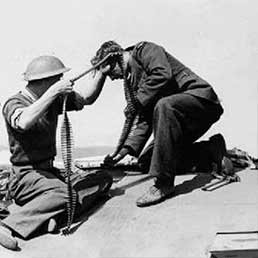
Allied and German uniforms are shown in separate rooms, each in a central cabinet that lets you walk all the way round and see them from every side. Flying kit, insignia and a comprehensive display of airborne and ground weapons complete the picture. Many items were given by the pilots and aircrew themselves: the men who fought in the Battle of Britain.
Recent additions include the uniforms of Wing Commander James Nicolson VC, the only RAF Fighter Command pilot of the Second World War to be awarded the Victoria Cross, and Group Captain John ‘Paddy’ Hemingway, the last surviving Allied Battle of Britain pilot, who is commemorated by the Last of the Few Memorial in the Museum grounds.
The Wall of Honour
Medals, logbooks and personal effects of New Zealand’s Battle of Britain pilots, together with those of Sgt Raimund Půda and Flt Lt Peter Brothers. Around the building hang more than 300 fine-art prints by leading aviation artists, many signed by ‘The Few’.
The Commanders
Lord Dowding: the actual service uniform of Air Chief Marshal Sir Hugh Dowding, the architect of Britain’s air defence in 1940. Dated 1939 in the collar, it is displayed with his dress sword and personal items, donated by the late Lady Dowding.
Sir Keith Park: in 2017 the Museum was chosen, ahead of museums in the UK, New Zealand, Canada and the United States, to receive some personal effects of Air Chief Marshal Sir Keith Park, commander of No. 11 Group. Collected after his death by his friend and neighbour Don Lobban, they are displayed on the right-hand side of Dowding’s display, as befits his right-hand man during the Battle.
Heroes, famous and forgotten
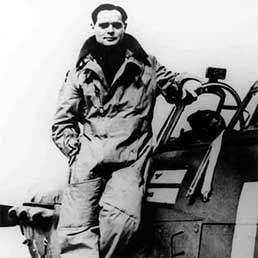
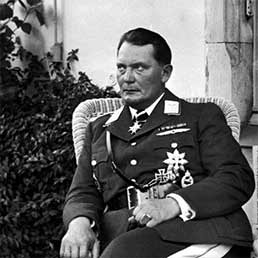
Personal items from the families of legends such as Douglas Bader and ‘Bob’ Stanford Tuck are displayed alongside those of lesser-known sergeant pilots, whose stories matter just as much. The Luftwaffe Gallery shows items donated by former Luftwaffe pilots and aircrew, and objects linked to their commander-in-chief, Hermann Göring.
The first ‘Battle of Britain’
In its own dedicated room, a small First World War display traces the birth of air warfare, from the skies over the trenches to the Zeppelin and Gotha raids on Britain that foreshadowed 1940. Its uniforms and artefacts come from the Royal Flying Corps, forerunner of the RAF, together with items from the German Navy’s attacks on Dover and Folkestone harbours.
All weapons on display have been deactivated in line with Home Office guidelines and cannot be loaded or fired.
